Listen before you look
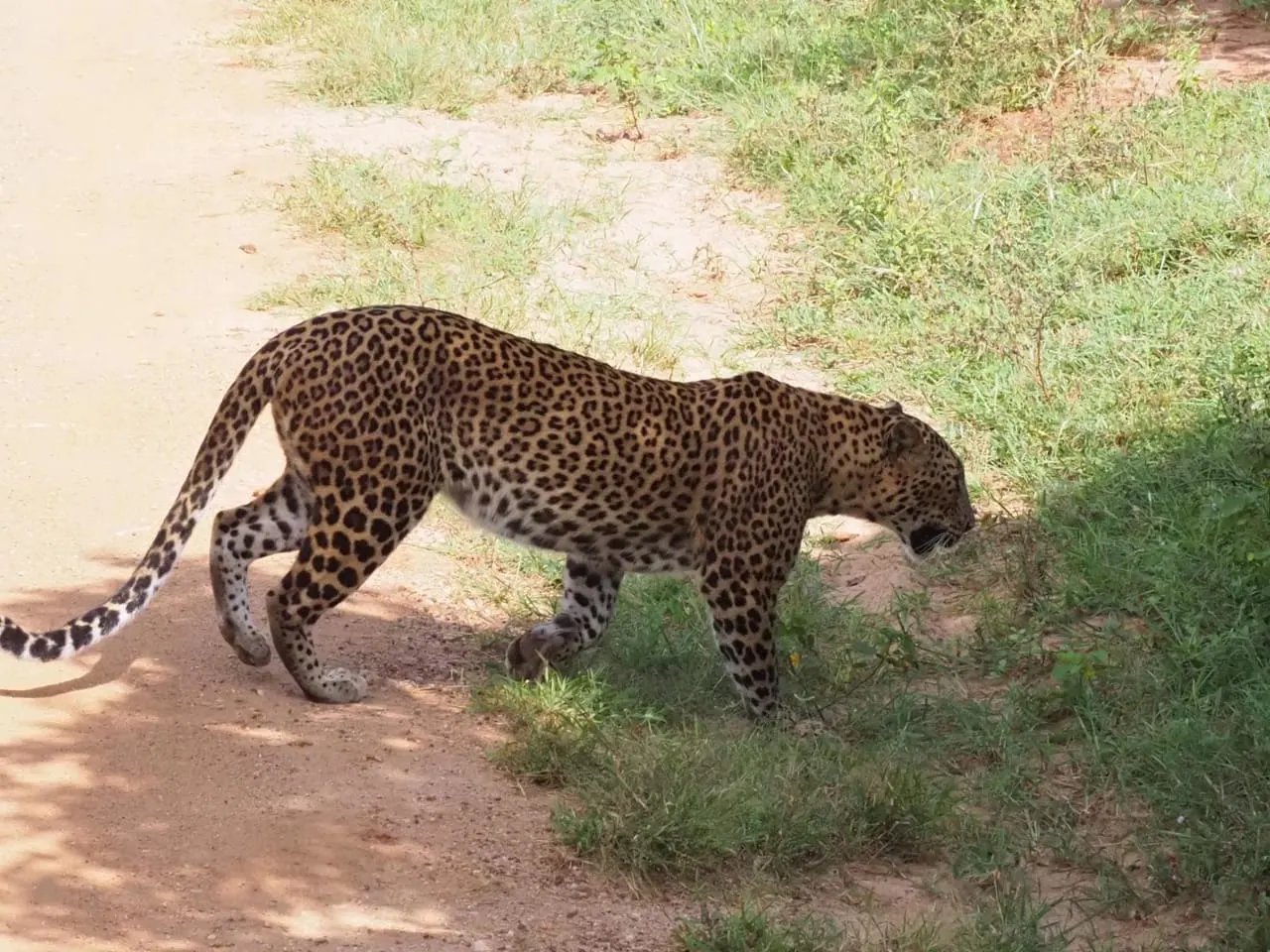
A leopard moving through Block 1 leaves a trail of noise behind it. Spotted deer bark, langurs rattle from the canopy, and junglefowl scatter. When those calls repeat from the same place, something is walking.
This is why a good driver cuts the engine in what looks like an empty clearing. Once the jeep is quiet you can hear which direction the alarm is travelling in, and get ahead of it.
Watch the prey, not the road
A herd of deer standing rigid and all facing the same way is worth more than ten minutes of scanning rocks. They know where the cat is and they are telling you.
Langurs are the best spotters in the park: they sit high, see far and lose interest the moment the danger has passed. When the troop goes quiet and starts feeding again, the leopard has moved on.
Then be patient
The hard part is staying. Most missed sightings are jeeps that waited four minutes when six would have done it.
This is the real argument for a longer drive: a 6-hour or full-day safari lets you spend twenty minutes on a hunch instead of moving on to cover ground.